

Miscellaneous
Final Edition
R.I.P.: Newspaper Boxes
…and then there were none.
That was the thought that struck me on a January morning after I set out on what should have been a simple errand: find a San Francisco Chronicle vending machine, drop in a few quarters, and pick up a print copy of the day’s paper.
I wasn’t looking for the headlines or the sports scores or the latest political dust-up. I was looking for an obituary, the final public trace of the husband of a friend, an elderly San Franciscan whose background—writer, music lover, New Yorker—felt close to home.
I knew the machines were disappearing. I’d watched them vanish from Mission sidewalks one by one, like old friends quietly slipping away. Boxes with the free Examiner had held on a little longer—especially in other pockets of the city, like the shopping corridor along Clement Street—but even those were thinning out.
Still, I believed some of the Chronicle boxes would be where they’d always been. After all, the Chronicle was the city’s paper of record. Surely, they’d keep a few machines alive for people like me.
But the first location in the financial district had nothing.
The second, in Union Square: Zilch.
The third, at the cable car turn-around: Nada.
I walked block after block, playing detective, checking corners where yellow boxes had once stood like sentinels of civic life.
Gone. All gone.
I made my way to Fifth and Mission, thinking, well, if anywhere still has a box, it’ll be outside the Chronicle building itself. But the sidewalk was bare.
Inside the lobby—which I discovered was now off limits to the public—there was no trace of a newspaper rack. Not even a token one for show. It was as if the publishing gods had quietly decided that the print Chronicle no longer needed to exist in the physical world.
I stood there for a moment, feeling a strange mix of foolishness and loss. Not grief—not exactly—but the kind of hollow recognition that something you took for granted has slipped into history without telling you.
The irony, of course, is that I’m no Luddite. I’m 81, yes, but I’m as tech savvy as any Millennial. My daily news diet comes from a constellation of online aggregators, curated feeds, and non-paywall sources like SFGATE.
I scroll through Reddit threads.
I skim Google News.
I dip into Substacks and follow a handful of niche sites that would have baffled my younger self. I walk around listening to podcasts—politics here, tech there, sports in between.
I abandoned paid newspaper subscriptions years ago, but I still picked up the free papers—the Examiner, the Bay Area Reporter—from the remaining street boxes. It wasn’t nostalgia. It was habit.
Ritual.
A former reporter’s obligation.
And yet, as I returned home on BART, I couldn’t help noticing how different the world around me had become. Younger riders—heads bowed, thumbs flicking—weren’t reading articles at all. They were watching TikToks, scrolling Instagram Reels, chatting on Discord, living inside algorithmic feeds that delivered news, entertainment, gossip, and commentary in the same endless stream.
They weren’t reading the news; they were absorbing content.
Personalized.
Visual.
Transient.
I found myself wondering: What are they actually consuming? Where do they get their sense of the world? Do they even know what a Chronicle box used to look like?
That curiosity—that journalistic itch—led me down a rabbit hole of questions about the evolution of news: from broadsheets to paywalls, from lifestyle sites to aggregators, from long form articles to short form video blasts.
I wanted to understand how we got here, and what comes next, and what it means for a city whose identity was once printed every morning in black ink on white paper.
But on that morning, standing outside the Chronicle building with no newspaper in sight, the story felt simpler. More personal. More final.
The vending machines were gone. The print edition was slipping into the realm of memory. And the obituary I’d hoped to hold in my hands—to fold, to clip, to keep—existed only online or in physical copies I couldn’t easily find.
I realized then that the era I grew up in—the era that once provided me with a reporting job—was ending without ceremony.
The obituary, it turned out, was that of newspaper boxes.
Bob Gordon: 1932–2025
A Life in Words
Idon’t normally rummage around town for newspapers. But after reading an online tribute for Bob Gordon from his husband Bill, a pillar in the city's aging services community, I wanted the print version—something tangible to honor a man I’d never met but instantly understood was extraordinary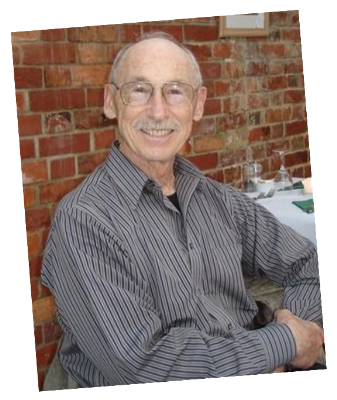 .
.
As the obit recounts, Bob taught creative writing in the English Department at San Francisco State University for 36 years, mentoring thousands of students in a program known for its innovation. He was named Professor Emeritus in 2002 in recognition of his contributions to the field.
A prolific writer, he published short stories, novels, and plays. Several of his plays were developed at the Eugene O’Neill Theater Center and produced at major venues including Chicago’s Goodman Theater Center and, in San Francisco, the Yerba Buena Center for the Arts, the Actors Ensemble Theater, the Marsh, and A.C.T.
In his eighties, he undertook a three‑volume historical novel about Bishop James Pike, the influential and controversial Episcopal leader based at Grace Cathedral. Though unfinished, his extensive research is now housed in the cathedral archives.
Bob also collaborated with composer Lou Harrison on the libretto for Young Caesar, a gay opera about Julius Caesar and Nicomedes IV. The work was performed to a sold‑out audience at Disney Symphony Hall in 2017 by the Los Angeles Philharmonic’s New Music Group and the Industry Opera Company.
For 25 years, he volunteered at Maitri AIDS Hospice, where he became affectionately known as “Bingo Bob” for leading the Wednesday night games that brought joy and distraction to residents living with AIDS.
But the real winning card was the 34 years he and Bill shared.